



10 Questions With NASFAA’s New National Chair, Dr. Angela Johnson
By Chloe Stanley, NASFAA Communications and Engagement Assistant
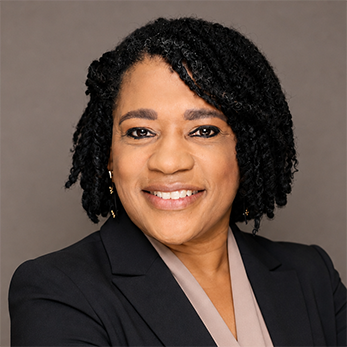 Meet Dr. Angela Johnson, NASFAA's 2026-27 national chair!
Dr. Johnson is the vice president of enrollment management at Cuyahoga Community College (Tri-C) in Cleveland, Ohio, and has 30 years of experience in financial aid. She began her career at The Ohio State University as a first-generation college student, where she discovered her passion for financial aid after an advisor explained her options and encouraged her to apply for a work-study position in the aid office.
“At the time, I had no idea about financial aid. I could barely do my own FAFSA, and my parents didn’t know how to do it.” Dr. Johnson said. “I often say I grew up in financial aid because, for all the years I was on campus, I worked in financial aid.”
After graduate school, she returned to higher education, serving in various financial aid roles and even serving as assistant dean of student affairs at Cuyahoga Community College before assuming her current role.
Throughout her career, Dr. Johnson has served in many capacities at the state, regional, and national levels, including past president of the Ohio Association of Student Financial Aid Administrators (OASFAA). She also served on boards of directors for the Midwest Association of Student Financial Aid Administrators (MASFAA), NASFAA, the College Board, the Higher Education Loan Coalition, and the Ohio Association of Community Colleges. She has also participated in negotiated rulemaking with the Department of Education (ED) and served on the Higher Education Committee of 50.
During her opening remarks at the NASFAA 2026 Virtual Summit, Dr. Johnson reminded attendees that remarkable growth is possible during seasons of change. In this Today’s News interview, she expanded on that message, explaining why she remains optimistic about the profession's future.
While change has often been driven by circumstances outside of the profession’s control, Dr. Johnson said those experiences have created opportunities to rethink how financial aid professionals support students. She pointed to growing conversations around affordability and student success, emphasizing that today’s work extends well beyond administering aid.
“It's about how we broaden the navigation across the institution, to help them understand the broader scope of the work that we do in financial aid.” Dr. Johnson said. “It's about student success and access, not just funding.”
As she begins her tenure as 2026-27 national chair, Dr. Johnson took some time to discuss her goals for the next year and what inspires her as a financial aid professional.
What do you think is the biggest issue facing the federal aid programs right now?
Ensuring that federal financial aid programs continue to fulfill the original promise of expanding access and adapting to today's learners. We know there have been some improvements. FAFSA simplification was exciting, and the policy changes that expanded Pell access. But while well-intentioned, these changes did not come with the funding to back them.
Thinking beyond some of the policy changes, I think the biggest challenge is the implementation of new regulations. Not only does it not give financial aid professionals an opportunity to adjust, but it also doesn't allow families to adjust and pivot financially. The unpredictability of financial aid from year to year is a significant challenge for practitioners and learners. How might we be more responsible in bringing that student experience into the policy conversation, so that future changes improve access and success? It is hard to have those conversations with families about changes that you don't quite know the answers to. We're all trying to find a space to be resilient in a time of change, while uncertainty continues to happen around us.
What are your top three goals for your tenure as national chair?
NASFAA's role as a trusted voice in financial aid has been solid and sustained for a long time. I think practitioners continue to see that and elevate it. I often think about how important the training NASFAA provides is, and how it continues to support the community. I certainly want to think about how we might do something this year to expand that in ways that help the community, who sometimes feel disconnected from federal changes.
I know there's been a lot of discussion around affordability, and I want to expand it beyond tuition. Financial aid professionals are uniquely positioned to help institutions think beyond tuition and develop more comprehensive strategies that address the full cost of attendance and the financial realities students face. Recognizing that financial support is student success, I think that's really important for us to think about and double down on.
Finally, one of the things that I've been thinking about quite a bit is the next generation of leaders. It's important for us to prepare the next level of leaders for what's next for them and to make sure we are preparing them for the legacy that's come before them and for how they can take the work that's happened so far a lot further. Throughout my career, I benefited from mentors who challenged and encouraged me. As chair, I want to think about opportunities for leadership development, mentorship, and engagement across the profession, and really helping people to step into this space in a different way, particularly those who today aren't in financial aid, but could be future financial aid professionals.
If you could change one thing about financial aid, what would it be?
The first thing that comes to mind is the complexity, and how to make the process easier for families. We have done some things to simplify, but it’s not just the application. Students are still spending a lot of time trying to think about how to navigate other parts of the complexity. The terminology, the different types of aid programs, and even having to apply every year don't create the certainty of going to college and finishing. It doesn't help you from a broader, comprehensive affordability perspective because you only know about what you might receive in that one year.
That's the kind of complexity I think is a big challenge for a lot of families because starting college isn't the same thing as finishing college if you don't know how you're going to pay for it. If regulations change and affect your eligibility, or reduce or restrict access to an area, such as a loan reduction, those are big challenges.
My most motivating financial aid experience is…
I always have to bring it back to my story, and it's important because it's not that unique. Many of us have stepped forward to say we're the first in our families to go to college. I am excited that my son is a second-generation graduate now. But that’s what motivates me: recognizing what our first-gen students go through, especially low-income first-gen. I was also a Pell Grant recipient, but it changed the trajectory of my life and created the opportunities that wouldn't have been possible for me.
That continues to motivate me to meet students where they are, to help them redefine their stories about their families, and to think about how students are represented in policy. It's important that we think about the practical ways in which students are impacted, and how we can think more deeply about ensuring other students have access to education and bringing hope for the future. Knowing that this work helps students realize those dreams continues to inspire me, even after more than 30 years in the profession.
Who has been the biggest professional influence for you over the years, and why?
When I was at Ohio State, her name was Vernice McNeil, and she said I should work in financial aid.
She is among the best leaders who have helped me think about how to listen to students and families, remain curious about the work we do, and never lose sight of the purpose and the reason we're here to support students. I've adopted that philosophy to guide me through my career, and it continues to influence how I lead today.
If you were not working in financial aid, what career would you pursue?
I remember, even as early as second grade, wanting to be a lawyer. But what keeps attracting me to this work is the policy work that says financial aid is more than just the numbers. So if I weren't in financial aid, I'd either be a lawyer doing policy work or advocacy in some way. That would be something that I would be drawn to, possibly aligned with higher education or another area or industry.
What’s on your summer reading list?
One thing I'm reading right now is “Think Again” by Adam Grant. I'm also reading “Tomorrow Mind” by Gabriel Rosen. I do readings with my team at least once a year. We take a book and read it throughout the year, and we adapt it to the organizational change we're doing at the college.
What's on your bucket list, or any upcoming travel plans?
I used to sell wine and do a lot of wine education with friends and family. So my travel plans every year that I look forward to are going to wine country. In fact, I recently went on a Pioneer Valley wine tour in New England. So, Connecticut, Massachusetts, and last year, I went to Seattle.The next wine tour is going to be in the Niagara Falls area in Canada. So, we are excited to see a wine region, and do food pairing and wine tasting.
What are some NASFAA services or products that are most helpful to you?
Well, my daily NASFAA Today’s News with my coffee — that's my must-read for sure, and certainly the conferences.
Training has been really valuable not just for the ongoing changes, but also for their professional development, and that's been really meaningful to us as an institution in supporting our team in the training area. I have 32 team members in the financial aid area specifically, and others in enrollment management. The financial aid team members, specifically, have earned a significant number of NASFAA Professional Credentials.
One thing I often like to read quite a bit of are all the reports, task forces, and policy recommendations; those are things I really geek out on for sure.
What is the best professional advice you have been given?
The best advice has been to lead with purpose, make really grounded decisions, serve students, and support our team in advancing the institution's mission, while certainly recognizing that students are individuals. Thinking about it in terms of purpose and being purpose-driven has been so valuable for me. Carrying that advice through my career has shaped who I am as a leader.
Publication Date: 7/24/2026


Helen F | 7/29/2026 10:45:20 AM
Great interview with our incredibly accomplished and talented National Chair! We are so fortunate to benefit from your leadership and contributions to NASFAA, Dr. Johnson.
You must be logged in to comment on this page.