



Book Review: "Lifting the Veil on Enrollment Management: How a Powerful Industry Is Limiting Social Mobility in American Higher Education"
In higher education, particularly in financial aid and admissions, we often discuss enrollment management (EM), which is designed to attract, enroll, retain, and graduate students in alignment with the institution’s mission and goals through internal, data-informed strategies. We analyze our discount rates, model our funnels, and balance our budgets, all in an effort to build a class that meets our institution’s academic and financial goals. The following question may appear a bit too forward, but nevertheless it encapsulates the crux of the book: How often do we interrogate the powerful, multi-billion-dollar industry of consultants, data vendors, and analytics firms that shape these strategies?
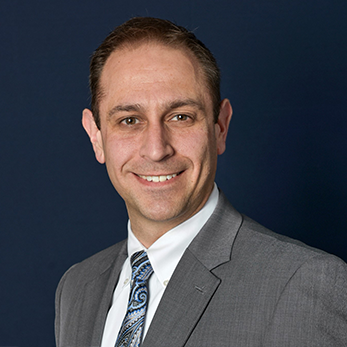 Reviewed by: Steven J. McDowell, associate vice president for financial aid services and Title IV compliance, Connecticut State Community College
“Lifting the Veil on Enrollment Management,” a collection of essays edited by Stephen Burd, a senior writer and editor with New America’s education policy program, argues the need for greater transparency in enrollment management and the urgency of that effort. This is not a “how-to” guide for optimizing enrollment; it is a “what-are-we-doing” exposé. The book’s central theme is both stark and profoundly troubling: The EM industry, far from being a neutral partner, has pushed colleges and universities into an arms race for prestige and revenue, directly limiting social mobility in the process.
Burd assembles a sharp group of researchers and journalists who dismantle the industry’s polished talking points. The essays reveal a system that incentivizes institutions to divert financial aid from high-need students to affluent families, not for academic merit, but as a “strategic discount” to secure their enrollment. The book exposes how the industry’s opaque data models and marketing platforms encourage a focus on chasing U.S. News & World Report rankings rather than fulfilling higher education’s public-good mission.
If nothing else, do yourself a favor and read the first chapter, “Reign and Ruin” by Neil Swidey, and the third chapter, “A View from the Inside” by Don Hossler. They provide readers with a narrative about the earliest accounts of enrollment management practitioners and the use of data benchmarking, as well as the birth of the U.S. News & World Report rankings and their impact on the enrollment management industry.
In my opinion, this book is a must-read for financial aid administrators. It gives voice to the deep-seated professional tensions many of us experience daily. It explains the “why” behind the relentless pressure to shift our aid policies from a foundation of access and equity to one of “leveraging” and revenue generation. The contributing authors effectively argue that these practices, sold to us as sophisticated strategies, are often a primary driver of the affordability crisis for low-income and working-class students.
“Lifting the Veil on Enrollment Management” is a bracing, critical, and necessary call for reflection. It demands that we, as practitioners on the front lines, look past our own institutional data and question the very tools and philosophies being sold to our profession and, most importantly, ask who truly benefits.
For more insight into this book and Burd's point of view, see his interview with Liam Knox in Inside Higher Ed (May 2024), and Kim Buster-Williams' review in SEM Quarterly, Vol 13, No. 1.
“Lifting the Veil on Enrollment Management: How a Powerful Industry Is Limiting Social Mobility in American Higher Education,” edited by Stephen J. Burd, Harvard Education Press, May 14, 2024, pp. 288.
***
Steven J. McDowell, FAAC®, is the associate vice president for financial aid services and Title IV compliance at Connecticut State Community College, an independent consultant with Blue Icon Advisors, and the author of “Basic Guide to Financial Aid.” McDowell earned his Master of Business Administration degree from the University of Hartford, and his Bachelor of Science degree in finance from Bentley University. He is a graduate of AACRAO’s Strategic Enrollment Management Endorsement Program.
Publication Date: 3/31/2026

You must be logged in to comment on this page.