



NASFAA Members Advocate for Graduate/Professional Community on Capitol Hill
Nalia Medina, Assistant Director of Government Relations
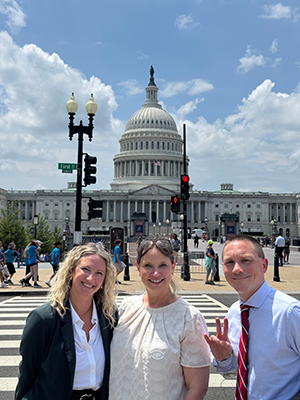 NASFAA recently hosted its annual Graduate/Professional community Advocacy Pipeline with members from Texas, Iowa, and Louisiana.
The participants – Ben Montecillo from the University of Houston and NASFAA’s 2025-26 Graduate & Professional Caucus Chair, Abbey Nagle-Kuch from Palmer College of Chiropractic, and Anna Daigle from the Louisiana State University Health Sciences Center – participated in in-person meetings on Capitol Hill.
The group met with various congressional offices, including Reps. Christian Menefee (D-Texas), Mariannette Miller-Meeks (R-Iowa), and Troy Carter (D-La.), as well as Sens. John Cornyn (R-Texas), Chuck Grassley (R-Iowa), and John Kennedy (R-La.). The group focused on financial aid policy issues specifically related to their graduate/professional students, including administrative burden, the impact of student loan origination fees on this student population, and implementation of the One Big Beautiful Bill Act (OBBBA).
Read on to learn about the Advocacy Pipeline experience, and fill out this interest form if you would like to participate in an Advocacy Pipeline event.
Ben Montecillo: Executive Director, Student Financial Aid, University of Houston
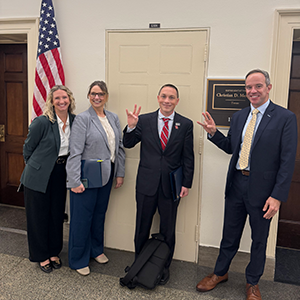 We had great conversations with congressional staff. We were explaining the realities of what financial aid administrators are experiencing on-campus as we try to implement OBBBA. We were able to get some of the staff to engage and understand our concerns with the implementation timeline. Our group was diverse in school types and student populations, so we were able to tailor each conversation to highlight many of the student populations the graduate/professional community serves.
Our conversations with congressional staff went better than I expected. We had a smaller group and were able to have in-depth conversations. We highlighted neutral positions that focused more on the implementation challenges of OBBBA, rather than the legislation itself. This helped turn the meetings into an engaging discussion rather than a partisan advocacy request.
Before meeting with congressional staff, it’s important to do your research on who you are meeting with and what their priorities are as it relates to higher education and federal student aid. If you can tailor your talking points to align with their priorities, you’ll have a higher chance of buy-in and engagement.
I was honored to represent our graduate/professional community, especially during this summer of implementation. We shouldn’t take for granted that our elected officials are accessible and willing to meet with informed constituents. We can bring truth to power by sharing our stories and the stories of our students can also help inform our advocacy. We may not get the policy outcome we want but by staying engaged, we can help keep our priorities on the forefront. Financial aid administrators can bring the technical expertise, as well as the student impact of policy decisions to legislators who are working on these issues. Few professions have such a group of talented and informed leaders to help carry the truth to government. When we advocate, we’re not just speaking to the best for our schools but for students across the nation. We can be a powerful force, and I hope many will continue to join in future advocacy pipelines.
Abbey Nagle-Kuch: Dean of Student Affairs, Palmer College of Chiropractic
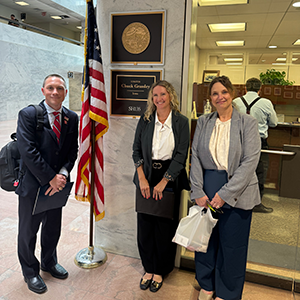 The Advocacy Pipeline experience with NASFAA far exceeded my expectations. I have always had great respect and appreciation for NASFAA because of its thought leadership and advocacy on behalf of financial aid professionals who carry out the work required by the federal government and our institutions. The Advocacy Pipeline experience further reinforced the important work NASFAA does every day to support institutions and students.
My favorite part of the Advocacy Pipeline was getting to connect with other financial aid administrators who are navigating the increasingly complex financial aid policy landscape. Having a focused cohort of graduate and professional institutions allowed us to develop a stronger collective voice during our meetings with congressional staffers and make a more compelling case for the unique challenges facing our students.
During our meetings, we advocated for the elimination of origination fees as an example of something seemingly “small” that could be a real and meaningful financial benefit for students. We also discussed the significant administrative burden financial aid offices are managing, particularly given the compressed implementation timeline of OBBBA. This provided an opportunity to recommend flexibility during upcoming audit cycles and to encourage policymakers to recognize institutions’ good-faith efforts to implement these changes effectively.
Overall, the Advocacy Pipeline experience reinforced the importance of engaging in the legislative process and advocating for meaningful change. The work of financial aid administrators is more important than ever, and those voices deserve to be heard as policies are developed and implementation strategies are shaped.
Anna Daigle: Director of Student Financial Aid, Louisiana State University Health Sciences Center
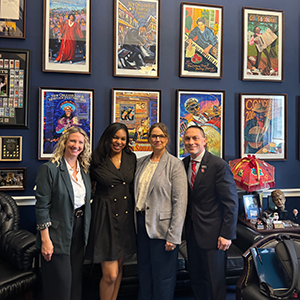 Participating in the NASFAA Advocacy Pipeline was an incredibly meaningful experience. Going into it, I wasn’t entirely sure what to expect; however, being part of a small group made all the difference. It allowed us to support one another, build on each other’s ideas, and approach each conversation with a shared sense of purpose.
Together, we raised important issues, including the need for greater flexibility in OBBBA implementation. The staff members we met with were attentive and engaged, taking notes and asking thoughtful questions. Being part of these discussions reminded me that our perspectives as financial aid professionals truly matter.
This experience left me with a strong sense of fulfillment. It provided a meaningful opportunity to give back, both to NASFAA and the financial aid profession that has supported my growth over the years. I came away more confident in my ability to advocate and more appreciative of the collective impact we can have when we share our voices.
Please fill out this interest form if you would like to participate in a future Advocacy Pipeline event!
Publication Date: 8/10/2026

Brandon T | 8/12/2026 3:26:13 AM
It’s encouraging to see NASFAA members actively advocating for graduate and professional students on Capitol Hill. These conversations can help bring attention to the financial challenges many students face. For those interested in https://arrests-me.org this resource may also provide useful public information. Strong advocacy and informed communities can make a meaningful difference in shaping better policies. It’s great to see representatives engaging directly with lawmakers on these important issues.
Heather B | 8/10/2026 1:55:44 PM
Thank you for representing the graduate/professional community!
You must be logged in to comment on this page.