



Reflections on the Financial Aid Profession: NASFAA’s 60th Anniversary
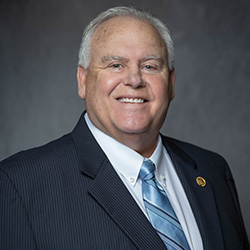 By Michael J. Bennett, former associate vice president of financial assistance services at St. Petersburg College and 2007-08 NASFAA National Chair
As America marked its 250th anniversary last month, it is worth remembering that higher education has been part of the nation’s story almost from the beginning. Harvard University was founded in 1636, 140 years before the Declaration of Independence was signed, and colleges and universities have played a central role in educating generations of Americans and expanding opportunity since.
We also recently marked two other milestone anniversaries: The 60th anniversary of the Higher Education Act (HEA) of 1965, and the 60th anniversary of the founding of the National Association of Student Financial Aid Administrators.
Enacted as part of President Lyndon B. Johnson’s Great Society agenda, the HEA established the nation’s first coordinated set of need-based federal student financial aid programs — and a commitment to helping students overcome financial barriers to college. Shortly thereafter, NASFAA was founded on October 24, 1966, originally as the National Student Financial Aid Council. What started as a small but coordinated effort to bring together pioneers in financial aid has since grown into a unified national voice for a profession that strives to carry out that commitment every day.
For those of us who have spent our careers in financial aid, the founding principles established in the HEA — access, affordability, accountability, and oversight — are more than just policy. They stem from a belief that where a student starts in life should not determine whether they have the opportunity to pursue a college education.
In retrospect, I have proudly worked in this profession for 45 years, dating back to its earliest days.
As a first-generation financial aid recipient, I experienced firsthand how federal, state, and institutional grants and loans opened the door to higher education by removing barriers for students. It has been particularly rewarding to see how these programs have changed, particularly for low-income and first-generation students.
But today’s financial aid landscape demonstrates more than ever that the entire financial aid profession needs support, shared responsibility, and strong partnerships for our country to move forward.
Over time, the addition of unrelated public policy requirements has detracted from the core mission of helping students. These have included requirements related to Selective Service registration and certain criminal convictions. While those requirements have fortunately since been removed, they resulted in the profession increasingly becoming one of record-keeping and compliance with federal and state policies that at times conflicted with the educational and training mission of colleges and universities.
Financial aid professionals were dealt another blow just three years ago, as students and colleges experienced a failed FAFSA rollout and numerous unresolved technical and policy problems. Taken together, the unsuccessful implementation led to delays in financial aid decisions and awards for students, and enormous frustration for students, parents, and financial aid administrators.
In short, delayed financial aid means delayed — or even denied — access to higher education.
During this same period, a report from the College and University Professional Association for Human Resources (CUPA-HR) and NASFAA found:
-
More than half of all financial aid professionals were likely to seek employment in another sector within the next year.
-
The most common reasons cited for wanting to change jobs were pay and schedule flexibility.
-
Eighty percent of institutions were concerned about their financial aid offices’ ability to remain “administratively capable” due to high turnover.
As more than 2,400 financial aid professionals convened just outside of the nation’s capital in National Harbor, Maryland, to connect and proudly celebrate NASFAA’s 60th anniversary in late June, we collectively reflected on another year of monumental challenges that tested offices across all regions.
Our profession has overcome adversity with courage, optimism, patience, and grit. That resilience was reflected throughout the conference sessions and in the energy of those who attended.
Financial aid administrators understand the frustration students and parents experience. They understand the value of teamwork and partnerships, and they certainly understand stress. Many administrators stagger out into the parking lot after a long day, unable to remember where they parked their car or to talk in complete sentences when their spouse asks, “How was your day?”
We’ve seen in our own offices — and perhaps at times in our own homes — the silent tax that stress and burnout can take. That is why we must continue to advocate for institutions to provide the support that financial aid offices need — in staffing, training, and technology — to effectively support students each and every day, not only when significant changes are being implemented.
I applaud Under Secretary of Education Nicholas Kent’s promise to visit college campuses for a closer look, tour financial aid operations, and speak directly with staff, students, and institutional leadership. This is always the first step in genuine collaboration.
But still, our profession is currently overwhelmed by the large number of regulatory changes and implementation timelines. Financial aid offices have also struggled to receive timely responses to regulatory questions.
Dr. Angela K. Johnson, vice president of enrollment management at Cuyahoga Community College and the 2026-27 NASFAA national chair, addressed these challenges during the June 2026 NASFAA National Conference.
Her speech focused on resilience and finding “strength after disruption” — a sentiment most financial aid professionals can certainly relate to.
“[If] there is one thing financial aid professionals understand, it is how to keep growing when conditions are anything but ideal,” Dr. Johnson said, as she shared a theme to guide the profession this next year. “Bloom where students need us most. Not where conditions are easiest. Not where resources are abundant. Not where certainty exists. But where students need us most.”
I remain hopeful that others will join Dr. Johnson and NASFAA in stabilizing the financial aid profession, modernizing financial aid operations, and improving the experience for students and parents alike.
Lastly, I hear, see, and feel the current cries from campus colleagues during these times, and their resilience is a testament to the power of hope and the grit required to continue the enduring struggle for students and the future of our nation.
God Bless You All!
Michael J. Bennett has spent 45 years as a financial aid administrator and has served as the National Chair of the National Association of Student Financial Aid Administrators (NASFAA) and received Lifetime Service Awards from NASFAA, the Eastern Association of Student Financial Aid Administrators, the Southern Association of Student Financial Aid Administrators, Florida Association of Student Financial Aid Administrators, and New Jersey Association of Student Financial Aid Administrators.
Publication Date: 8/27/2026


Heather B | 9/8/2026 12:49:23 PM
Always love reading what you share, Mike. The challenges for our profession continue, but we must remain focused on the opportunities to bloom.
Todd S | 8/28/2026 3:2:12 PM
Well said Mr. B. - TS
Katie C | 8/27/2026 11:50:00 AM
Thank you, Mike, for your years of dedicated service to our profession! We love and admire you for your wisdom, grace, and humor. -Katie
You must be logged in to comment on this page.